STAT / Standing Together Against Trafficking
STAT Unites the Financial Crime Community
Collaborative tool and platform centralizes and tacks information on insights, indicators and typologies from financial institutions, allowing for the financial disruption of human trafficking and modern slavery.
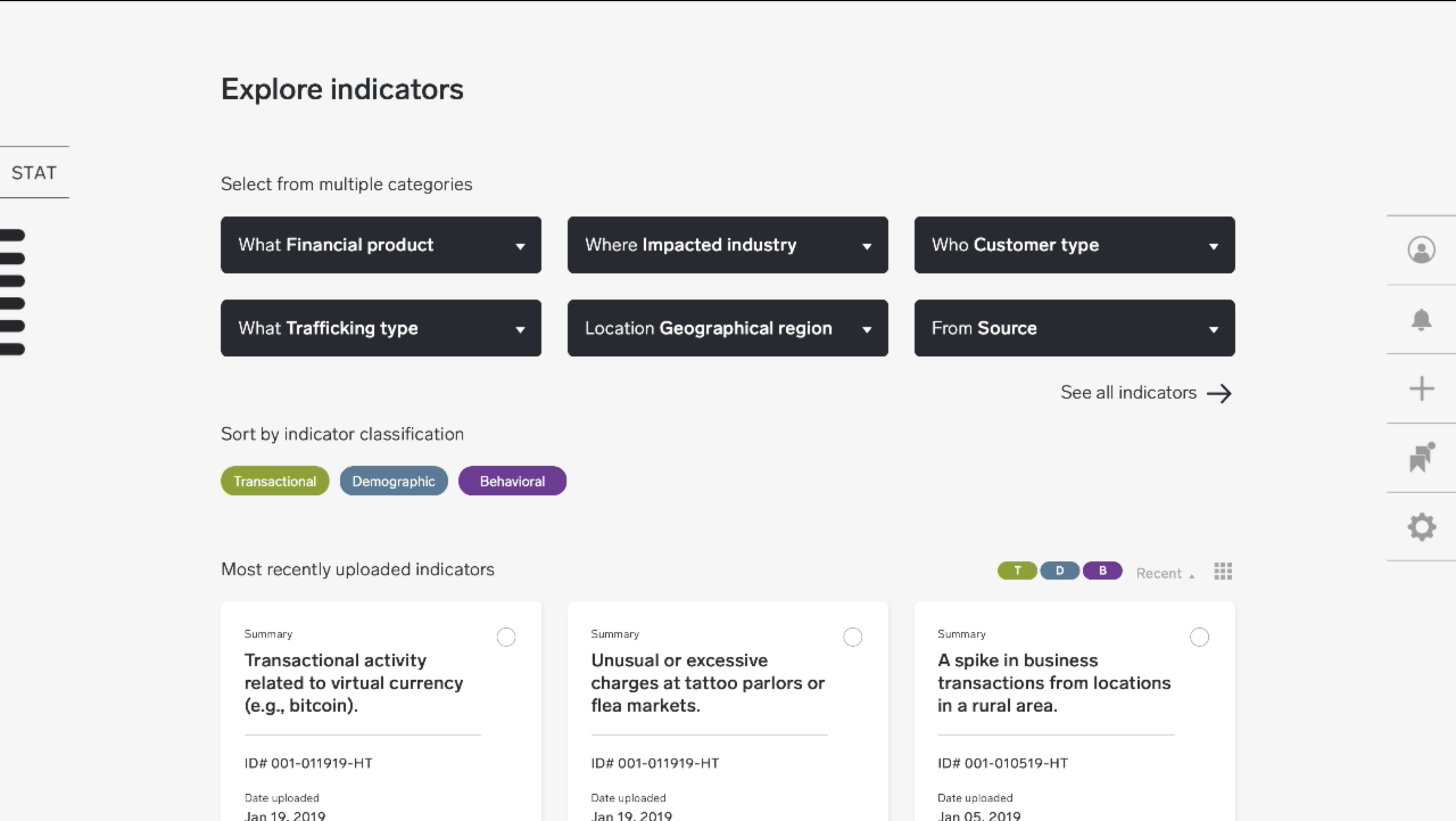
Collaborative tool centralizing information on insights, indicators & typologies
The platform provides a central repository of vetted human trafficking and modern slavery indicators. As the go-to source for those fighting these crimes, the platform allows us to share a common language, access resources around otherwise isolated evidence.
STAT’s ultimate goal is to put effectively-formatted and up-to-date human trafficking indicator information into the hands of financial institutions, law enforcement and NGOs, providing critical insights so they can act quickly to save lives.
Where did we start?
Classify / Simplify / Unify
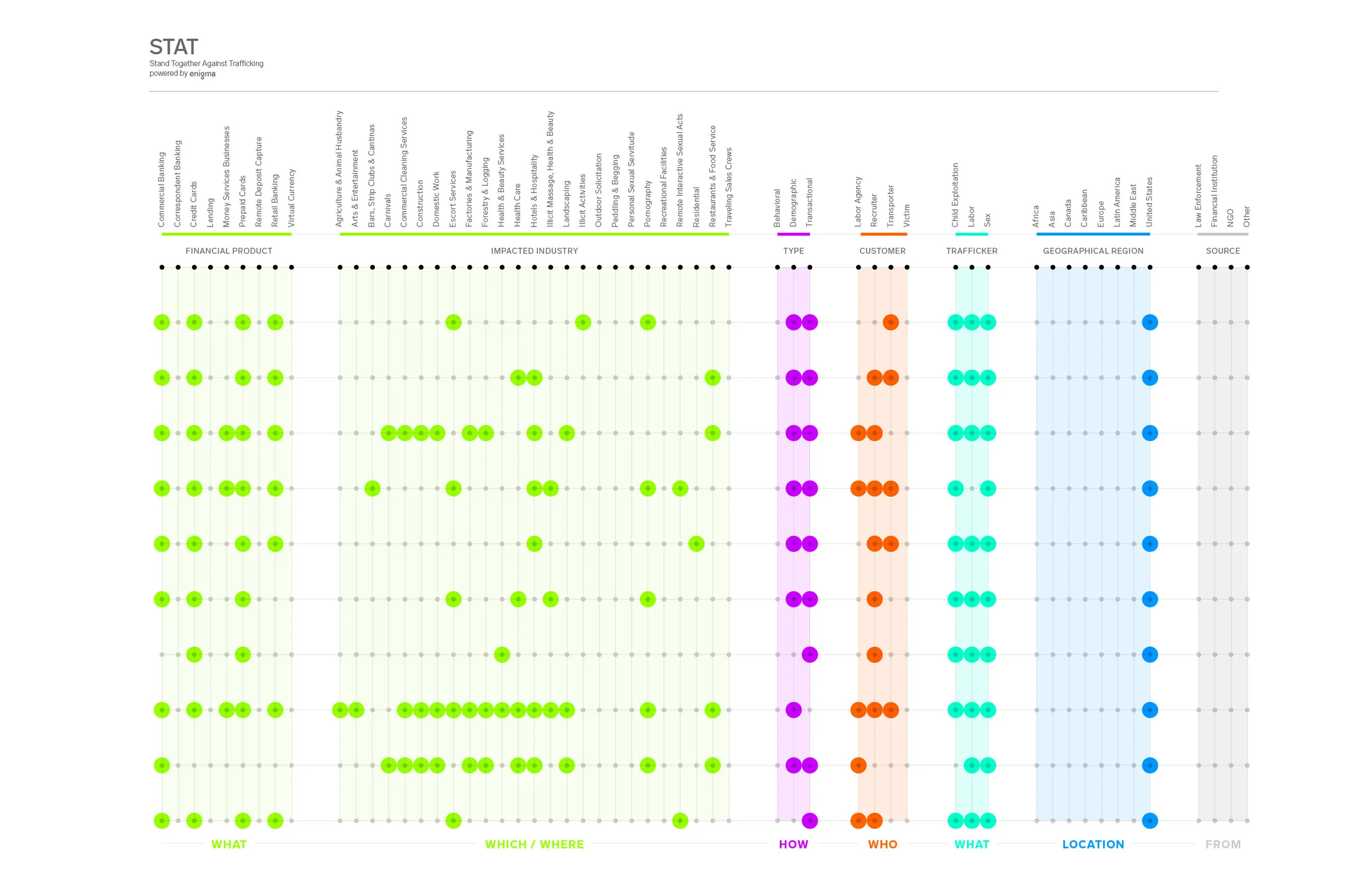
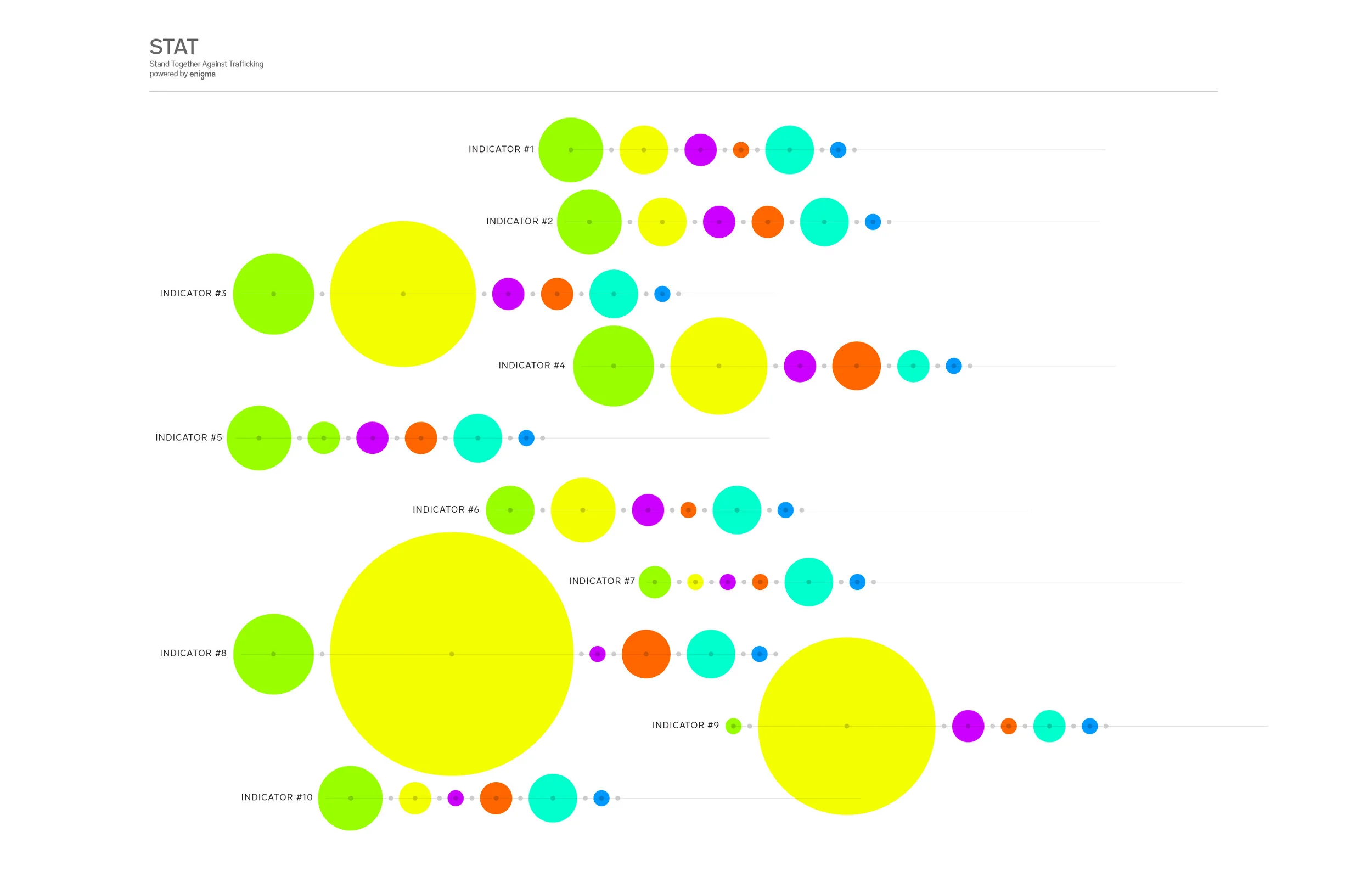
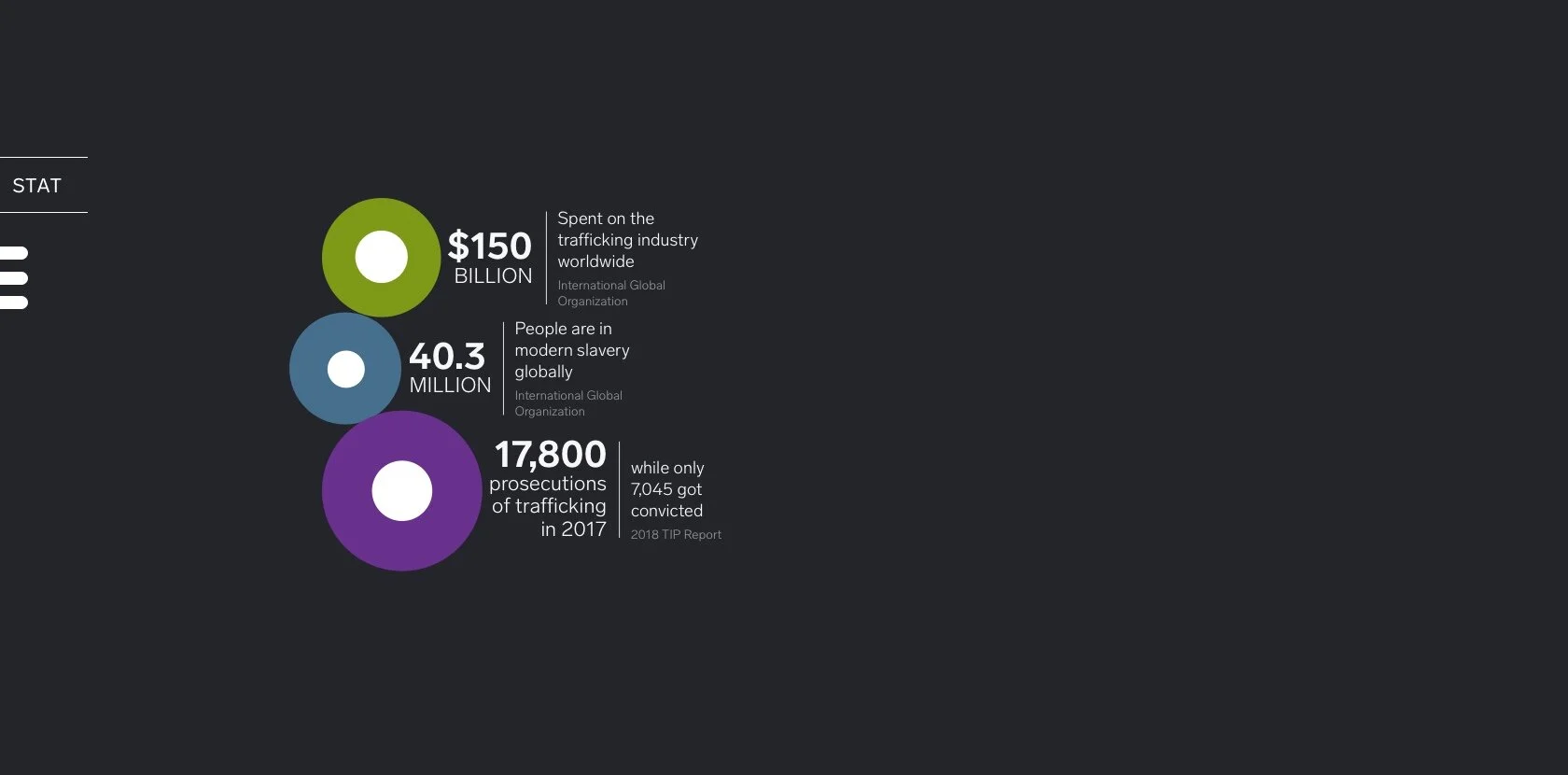
Challenges met head-on
Classify the indicators
Trace primary indicators across transactional, demographic and behavioral lines and provide data on relevant products and industries.
Simplify the complex
Render exhaustive data into a user-friendly format, utilizing human-first design models to facilitate accessibility of information.
Unify the fight
Unify the disparate and isolated efforts to end human trafficking and modern slavery by creating a platform that facilitates collaborative exchange between those fighting these crimes.


Building the DNA of an indicator
Indicators categorized across transactional, demographic & behavioral lines.
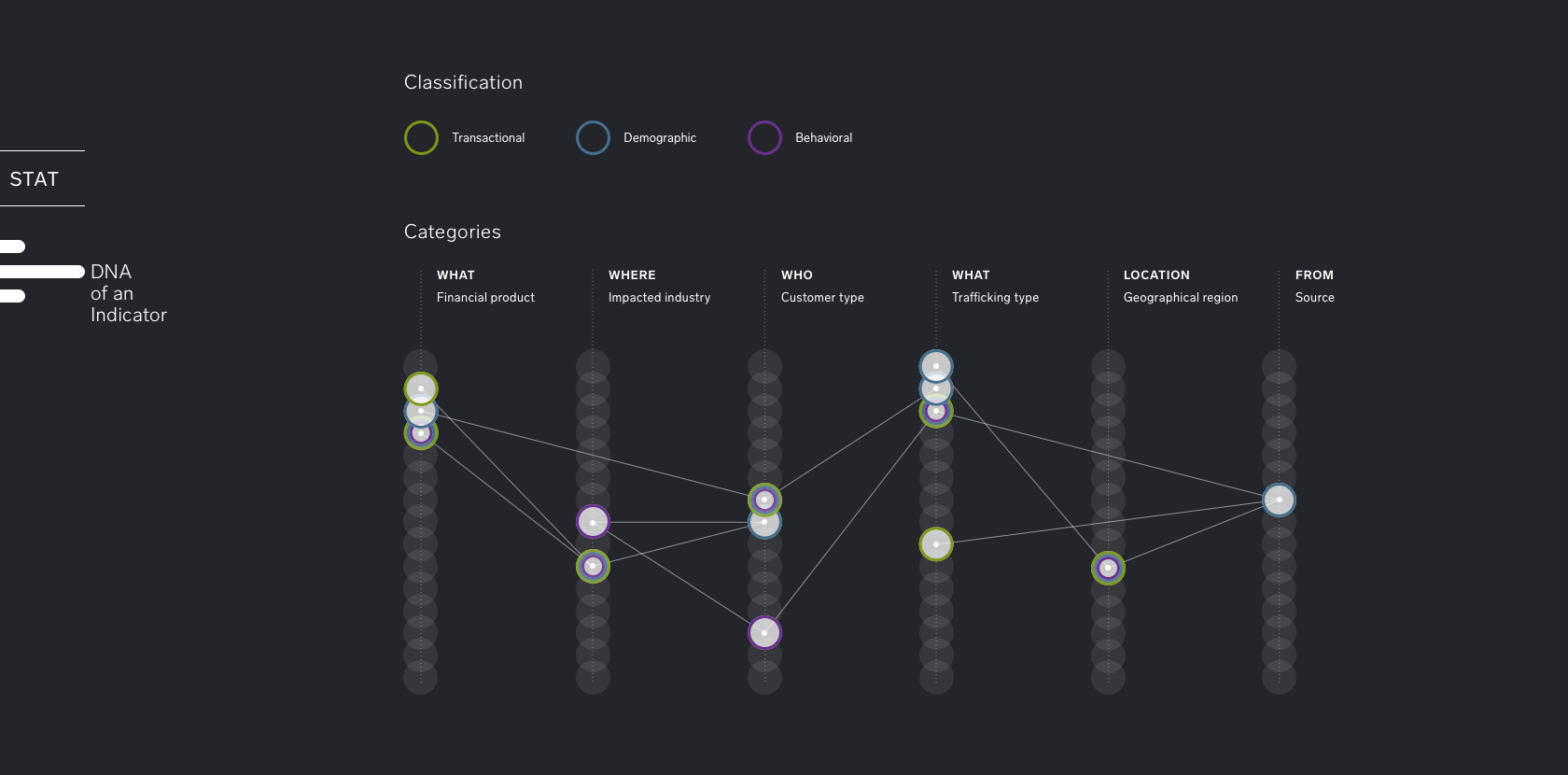
Dadamaino’s work served as a major design inspiration while conceiving of how to visually represent & unify the complex data into a simplified system so as to highlight the patterns that emerge across financial indicators & typologies.





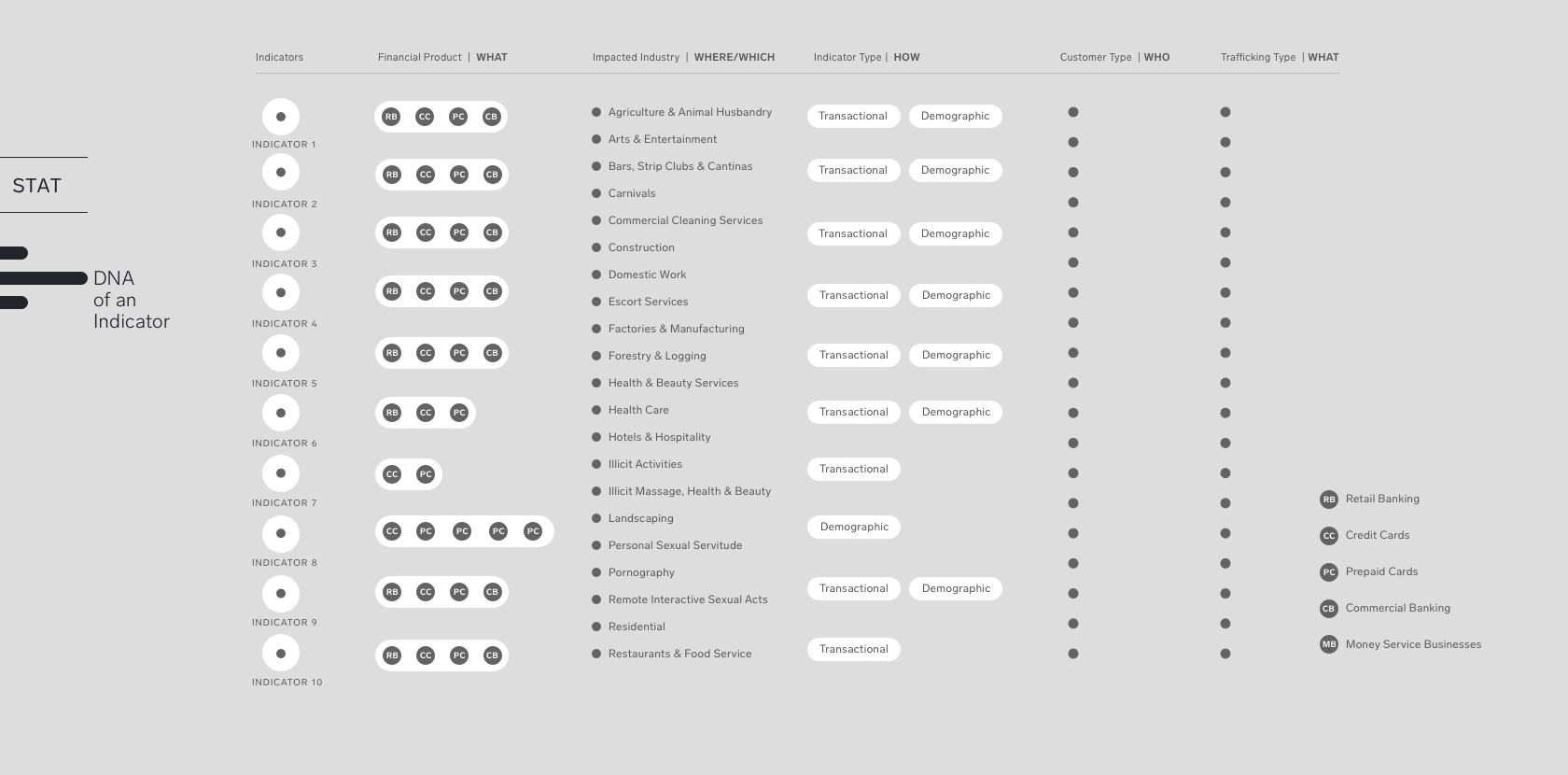


The platform that provides a central repository of vetted human trafficking indicators.
Graphing the data
We created infographics, charts, and downloadable csv files to humanize the complexity of the data analytics.
Smooth interface
Users can navigate the varied relevant categorizes of indicators, products and industries through a minimalistic and user-centric format.
Community platform
Platform serves as an exhaustive and systematized resource, providing guides and statistics from NGO’s, law enforcement and financial institutions.


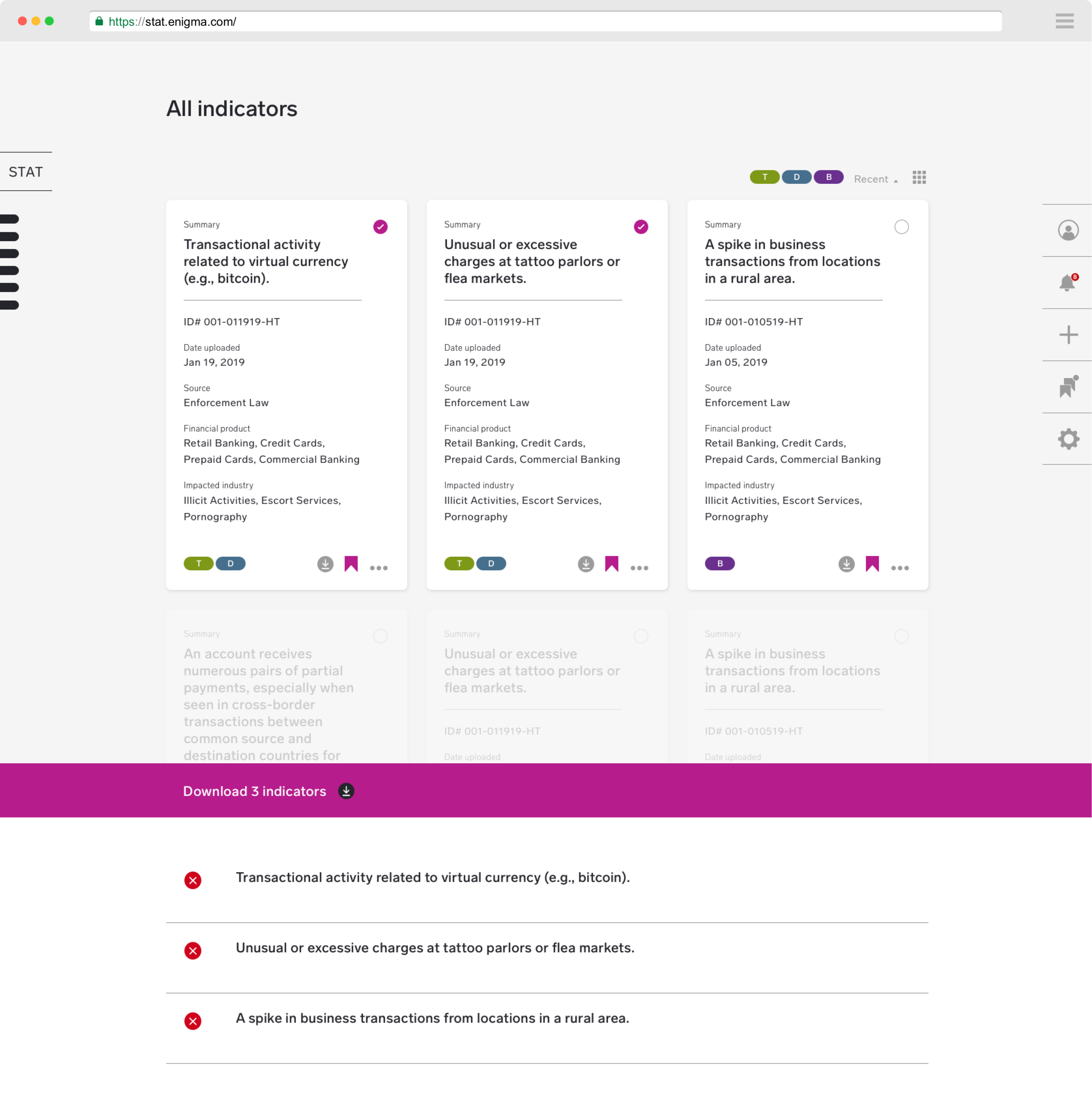
STAT Primary flows
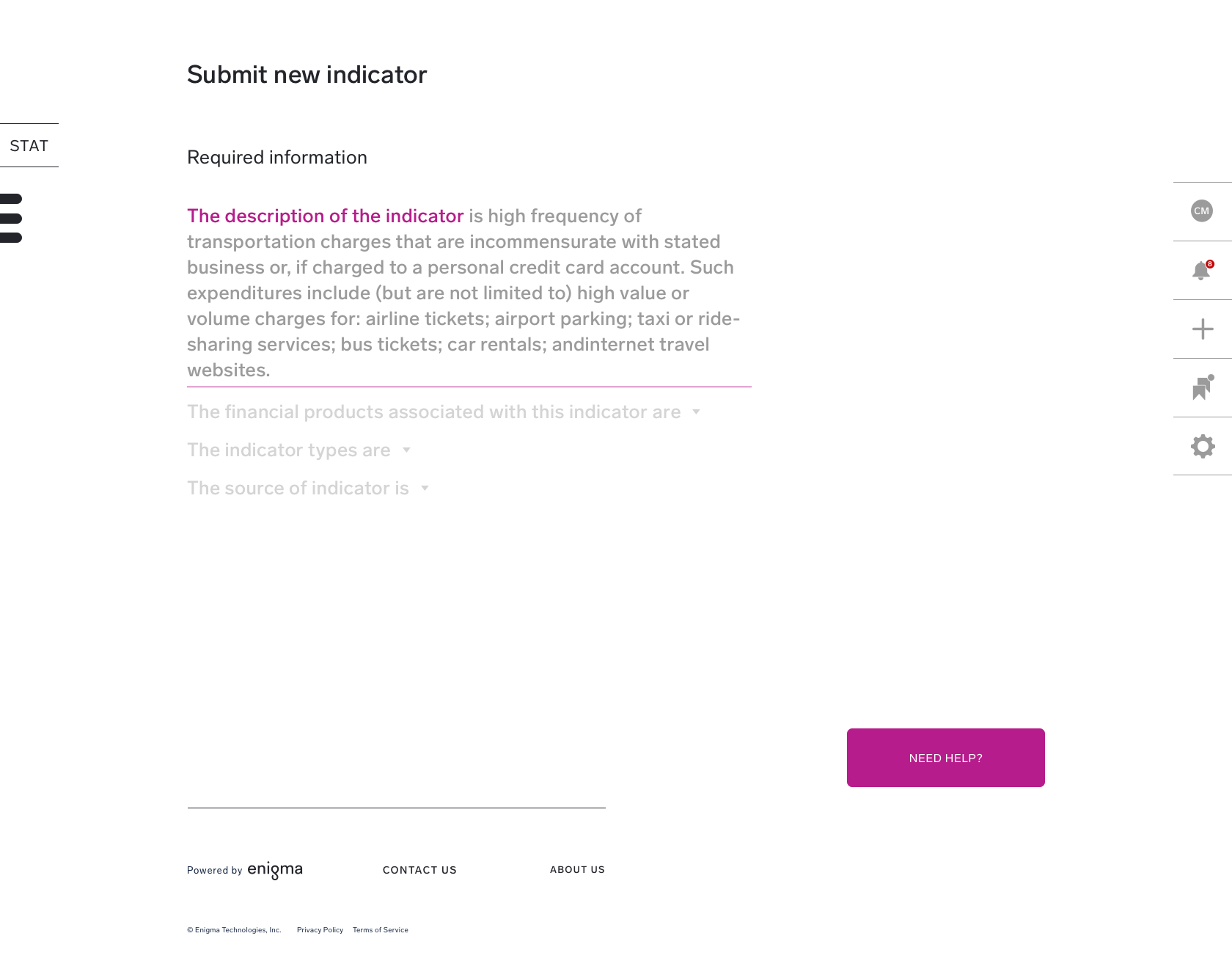
Submit an indicator

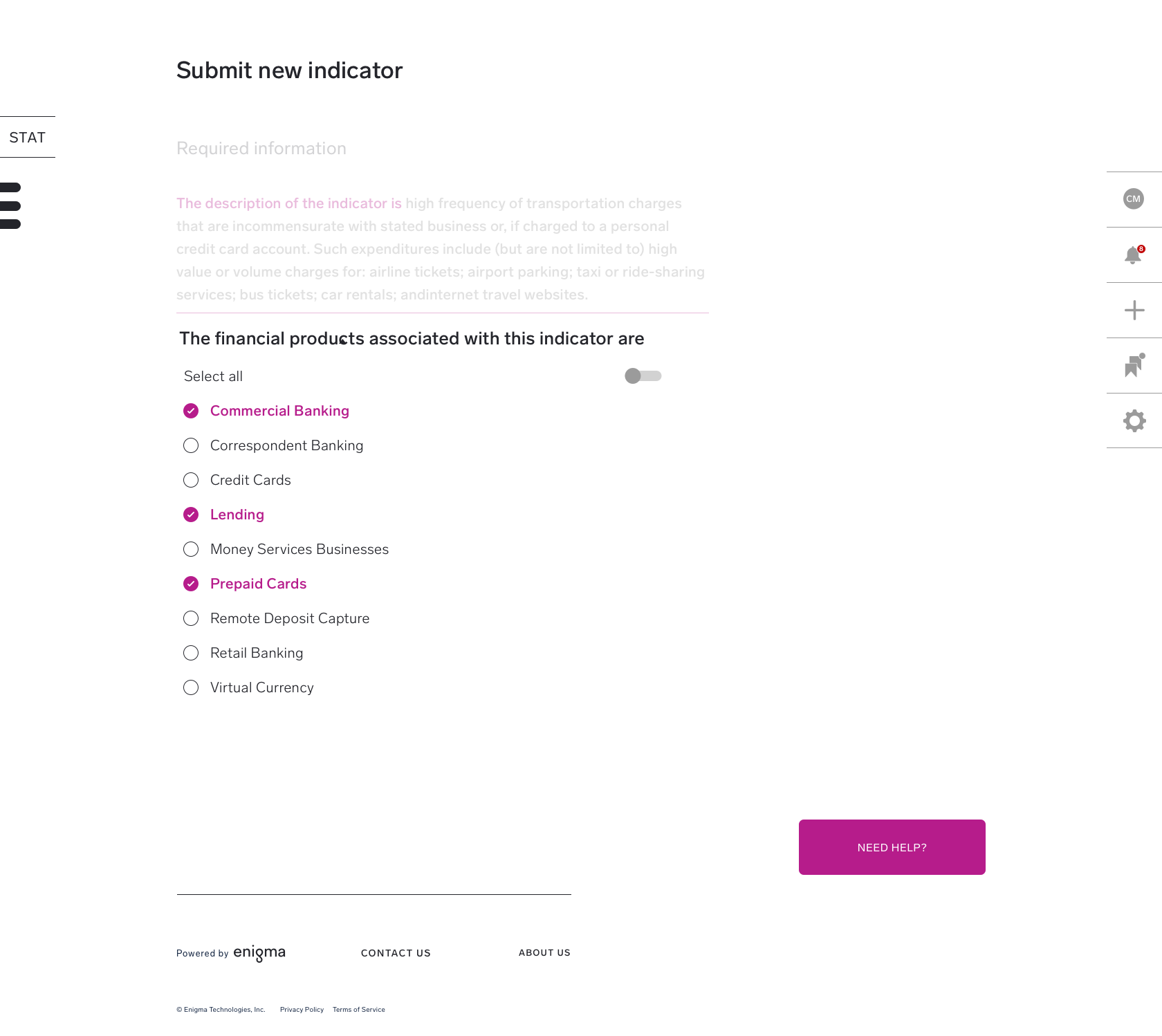

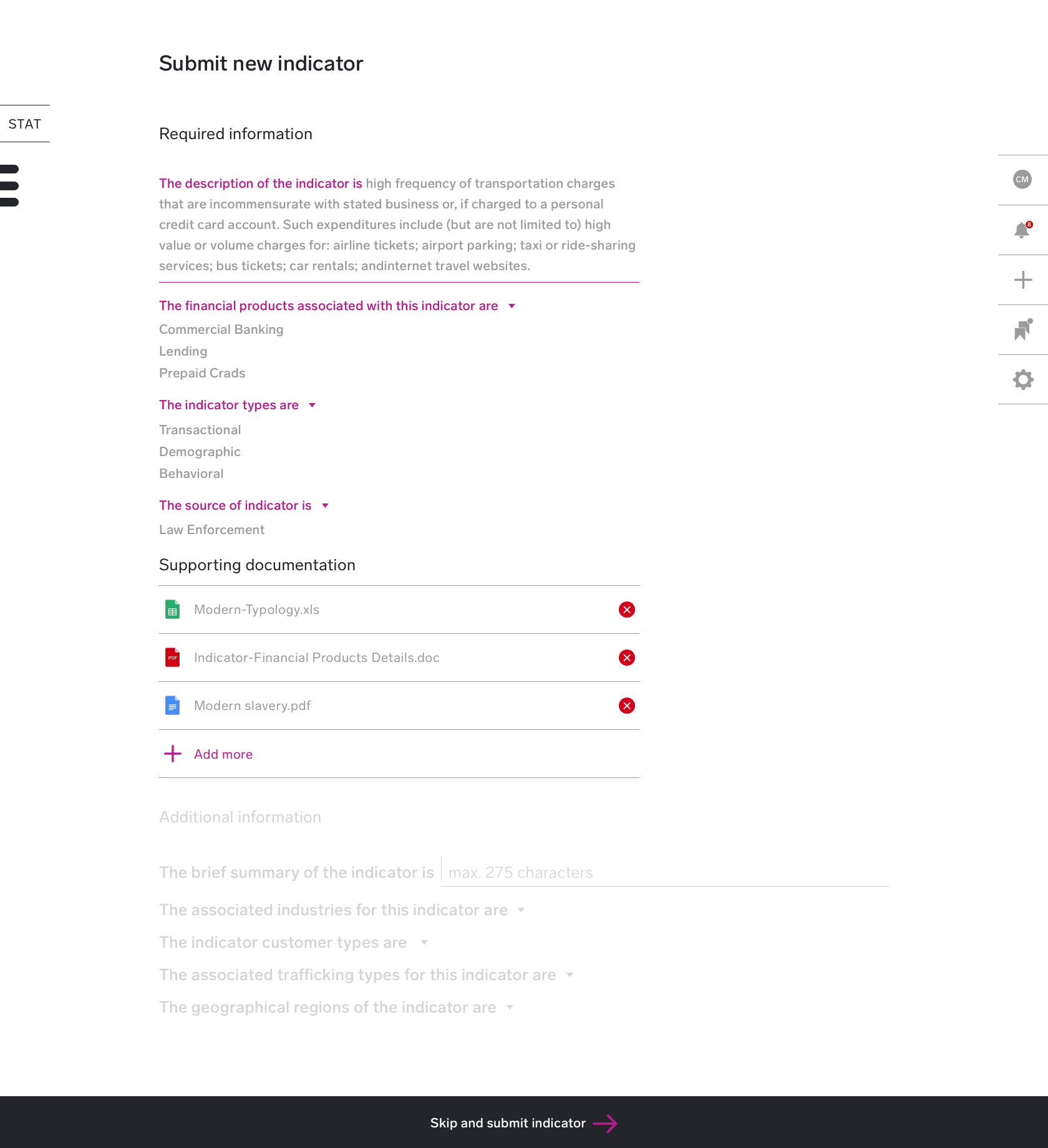

Search indicators and typologies


Download indicators and typologies


Additional components


Typology, trafficking in “Seasonal Blueberry Farm”
Defining Sex & Labor Trafficking in the United States

Discovery user research summary
“Alone we can do so little, together we can do so much.”
– Helen Keller
Executive Summary
STAT can provide value to financial institution investigators, both new to and experienced in the fight against human trafficking, by emphasizing how typologies connect to financial products and by emphasizing new information.
Goals
We had two aims during our interview process/
One was to establish both the potential market for STAT and to better understand the need for such a platform.
The other was to highlight which features would drive the greatest impact.
Participants
There were four separate rounds of interviews, with participants from four major financial institutions.
One group of participants were structured with two colleagues answering the questions at once.
These participants either volunteered, submitting their name to a form following an ACAMS webinar, or were asked to participate.
Findings
The interviews provided additional information as to the ‘personas’ (goals and needs) of the potential users of the site and information on specific features that might be more or less helpful in aiding the participants in reaching their goals.
All participants were passionate about aiding in the fight against human trafficking, an issue related to if not central to their primary work. Half of the participants were already involved deeply in the issue and half were not. The primary ‘personas’ stemmed from this division.
User Stories
“The Involved Advocate”
As an experienced HT Investigator, I will like to contribute with my expertise on HT and typologies so I can spread awareness of the work of nonprofits, inside and outside of my organization .
“The Passionate Newcomer”
As a Financial Institution Investigator, I need an easy entry into HT information so I can stay up-to-date and do all that I can do on this topic.
Key findings
Community-driven.
What’s out there & what is new.
Single go-to source.
Interview framework
The interview had three parts. The initial warm-up section asked about the participant's role, tenure in the space and how or whether they engaged with data.
The second section sought to uncover the interviewee’s previous knowledge of and participation in the anti-human trafficking space, including whether they engaged with particular non-profits.
The third section focused on the interviewee's workflow and the basic elements and formats expected around typologies. Each interview ended with a final open-ended question to capture any other thoughts on the topic that may have been missed.
Personas
“Involved Advocate”
The “Involved Advocate” has already collaborated with other financial institutions and non-profits on the issue of human trafficking. They are seen as an expert on the topic within their organization. They have participated in roundtables and want to spread awareness of the work of nonprofits both within and outside of their organization.
The “Involved Advocate” will be difficult to provide value to through STAT, as they are will be familiar with all the typology reports forming the basis of the platform. Yet, it is critical to engage these users, as they will be the ones generating value through contributing new typologies to the platform while informing others of it’s existence.
“Passionate Newcomer”
The “Passionate Newcomer” had never thought much about human trafficking until becoming impassioned after learning about the scale of the problem and the role of financial institutions, such as their employers.
The “Passionate Newcomer” is unfamiliar with the nonprofits operating in this field. They likely heard about the scale of human trafficking by chance without preemptively searching for resources on the issue. They would like to help but are not sure how or where to start.
“ Collaborative tool and resource to stop human trafficking through financial disruption.”
– PayPal
What I did
Monitored user research. MVP Development. Lead and directed UX / UI Design. Conducted prototyping and testing. Design pattern library development.
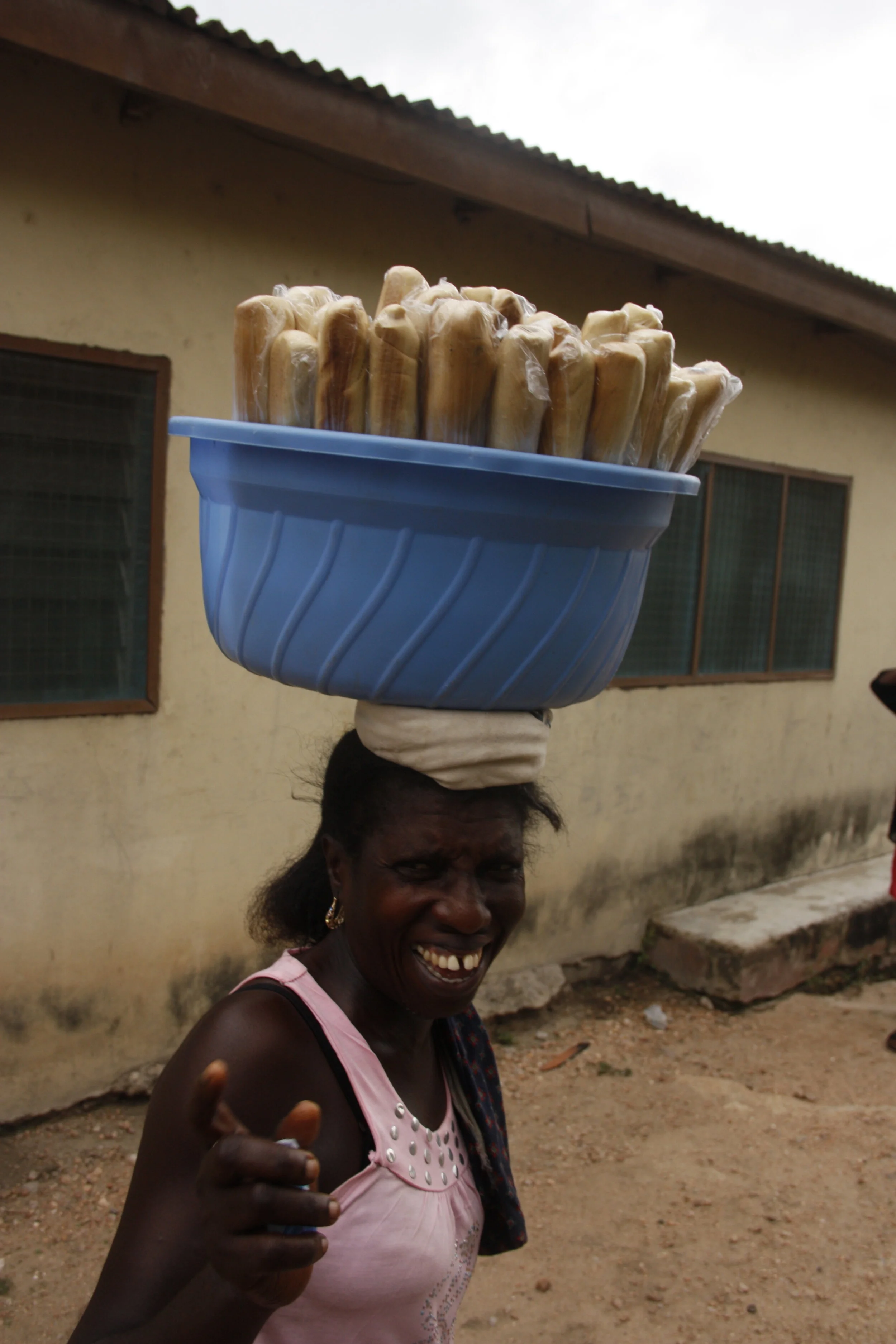
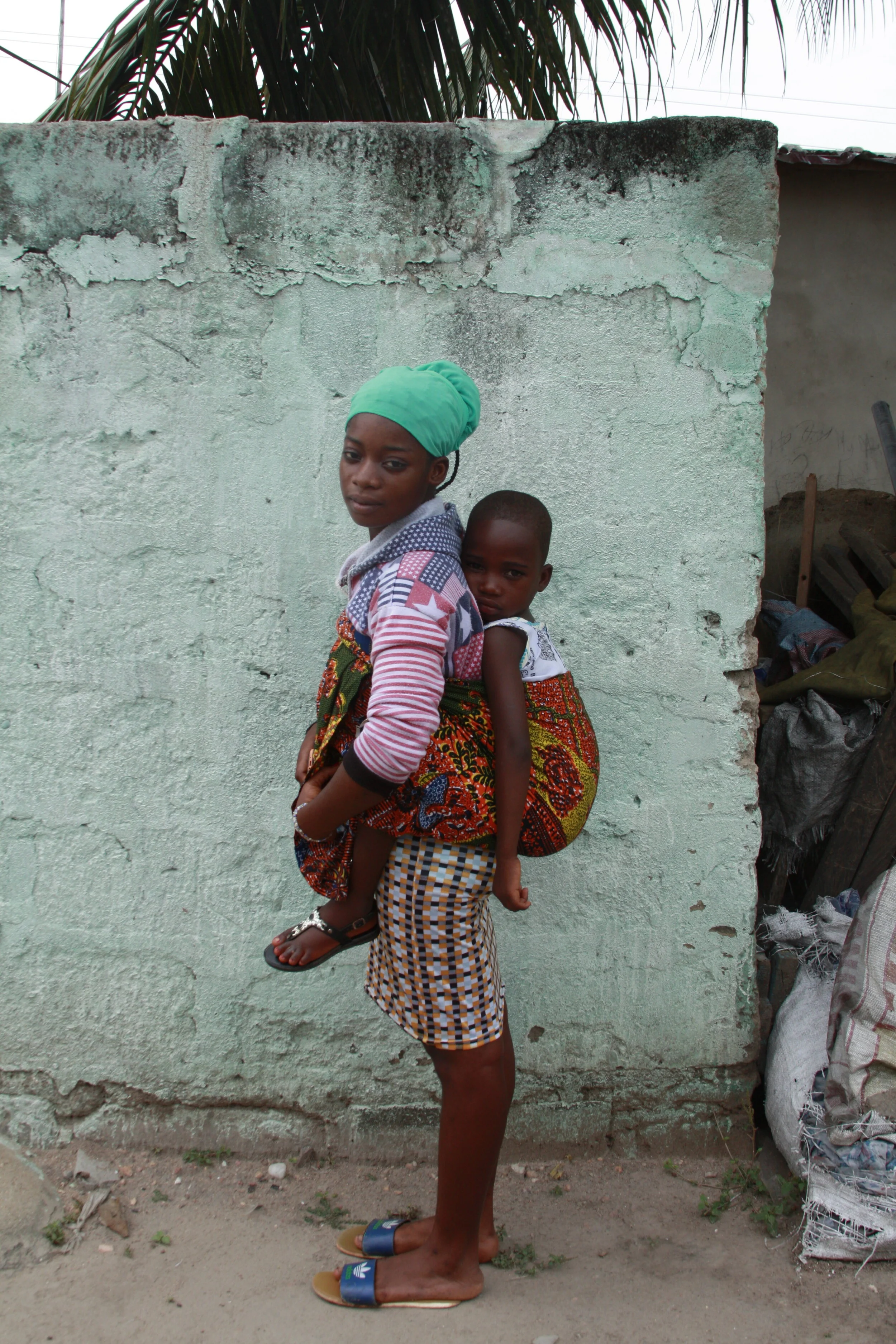
Thank you to Project Ghana
Beauty for Freedom is an art therapy initiative that provides photography, watercolor painting and mural workshops to over 300 youth at the Challenging Heights Friends International Academy and 58 young survivors of labor trafficking housed at the CH house.






Thank you to AnnieCannons
Transforming survivors of human trafficking and gender-based violence into software engineers and entrepreneurs.
In collaboration with:
Angel Nguyen Swift / VP, compliance and financial crime solutions
Donia Khalifa / product manager & creative producer
Clo / lead product designer / claudiamauro.com
Ann / Lead Designer / annlidesign.com
Jiyeon / Product Designer / jennykang.me